
Two weeks is enough to see the core of Java if you pick a direction and stay with it: Yogyakarta and its temples in Central Java, the volcanoes of East Java, and an exit through Banyuwangi toward Bali. This route trades a few well-known places for time to see the ones you choose properly, because Java is large and overland travel days are long.
Below is a 14-day route, how to move between stops, and where to cut or extend it. If you want to place Java inside a longer trip, our 13-day Indonesia itinerary shows one way to link islands.
The route at a glance
| Days | Base | Highlights |
| 1–2 | Jakarta / Bandung (optional) | Arrival, tea country and crater views around Bandung |
| 3–6 | Yogyakarta | Borobudur, Prambanan, Kraton, village and craft visits |
| 7–9 | Bromo area | Sunrise over the Tengger caldera, crater walk |
| 10–11 | Banyuwangi / Ijen | Night hike to Ijen’s crater, optional Baluran National Park |
| 12–14 | Bali or the coast | Ferry or flight onward, rest days |
Day-by-day
Days 1–2: Jakarta and Bandung (optional)
Most international flights arrive in Jakarta. Few travellers choose to stay long, but a night here breaks up arrival. A fast rail link now connects Jakarta and Bandung, and Bandung’s highlands have tea plantations and the Tangkuban Perahu crater. If you are short on time, fly straight into Yogyakarta and start at Day 3. Check the current rail and flight options before building your plan.
Days 3–6: Yogyakarta and Central Java
Yogyakarta is the cultural centre of the route, and four days gives time for more than a checklist.
- The 9th-century Buddhist monument is the main draw. Access to the upper terraces is controlled in recent years, with quotas, timed entry and specific footwear, so book early and check current rules.
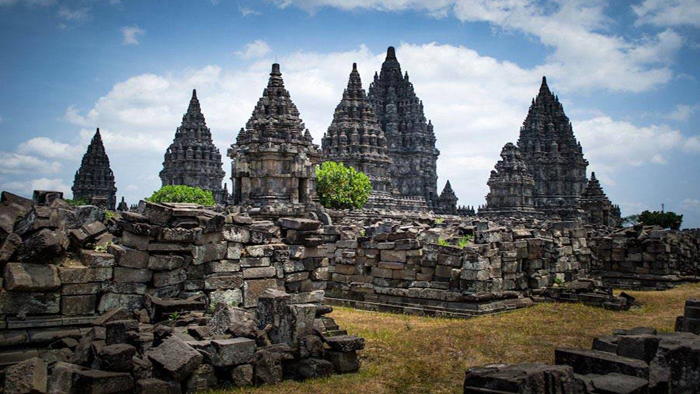
- A large Hindu temple complex. Late afternoon is quieter and the light is better.
- Kraton and Taman Sari. The Sultan’s palace and the old water gardens, best with a guide who can explain the royal context.
- Craft and village days. Batik, silver and pottery workshops, and rural cycling. A private guide makes these more meaningful than a quick market stop.
- Mount Merapi. An active volcano, visited by jeep tours. Access depends on current activity, so confirm.
Days 7–9: Mount Bromo
Travel from Yogyakarta to the Bromo area takes most of a day by train and road, so treat Day 7 as a transit day. Sunrise views from the Tengger caldera rim are the highlight, followed by a walk across the sand sea to Bromo’s crater. It is cold before dawn, so bring warm layers. Allow a rest morning afterward rather than another long transfer.
Days 10–11: Ijen and Banyuwangi
Ijen is known for its turquoise crater lake and for the blue flames that can be seen inside the crater in the dark. The hike usually starts in the middle of the night. Respirators are strongly recommended because of sulfur gas, and conditions can close access, so check current status. Baluran National Park, a dry savanna landscape nearby, makes a gentler second day.
Days 12–14: Ending in Bali or the coast
From Banyuwangi, the ferry to Bali is short, and flights are also available. Many travellers finish with rest days on Bali’s coast. If you would rather stay in Java, quieter coastal options exist, but they require more planning. If you are going to Bali, our guide to Badung covers the southern part of the island.
Best time to go
The dry season, roughly April to October, is more reliable for volcano sunrises, clear mornings and Ijen hikes. The wet season brings more cloud and rain, and trails can be slippery. Peak domestic holiday periods, including the Eid travel period, make trains, hotels and roads busier, so book earlier if your dates overlap.
Getting around Java
- Trains connect the main cities and are a pleasant way to cross Central and East Java. Book ahead, and confirm the current timetable.
- Private driver is the easiest option for the volcano legs, where public transport is limited, and for pre-dawn starts.
- Domestic flights can save a long day if time is tight.
Cultural notes
Java is predominantly Muslim, with strong Javanese traditions. Dress modestly in villages and at religious sites. During Ramadan, expect changed opening hours and eating habits in some places, though travel is entirely possible. Our Indonesia dos and don’ts has practical etiquette.
Common mistakes
- Trying to cover Jakarta, Bandung, Yogyakarta, Bromo, Ijen and Bali in 14 days with no rest days.
- Leaving Borobudur until the last minute. Ticket quotas and rules change.
- Underestimating the pre-dawn starts at Bromo and Ijen.
- Not packing warm clothes. Both volcanoes are cold in the early morning.
Ways to adapt the route
- Short on time: drop Jakarta and Bandung and fly into Yogyakarta.
- Culture focus: add Solo and Dieng.
- Nature focus: add Baluran and a coastal stay.
- Comfort focus: replace one long road day with a domestic flight, and add private guides at each stop.
FAQ
Is 2 weeks enough for Java? Yes, for a focused route covering Yogyakarta, Bromo and Ijen. It is not enough to cover the whole island.
What is the best route through Java? A west-to-east route from Yogyakarta to Bromo to Ijen is the most common, ending in Banyuwangi for the ferry or flight to Bali.
What is the best time to visit Java? Roughly April to October, when mornings are clearer and trails are drier.
Can I combine Java and Bali? Yes. The ferry from Banyuwangi connects Java to Bali, or you can fly.
Do I need a private driver in Java? Not everywhere, since trains work well between cities. A driver helps on the volcano legs and for early starts.
Plan a private Java itinerary
If you want Java arranged with private guides, pre-dawn logistics handled and a route that fits your pace and interests, Bespoke Indonesia Holiday can build it around you. Get in touch to start planning.